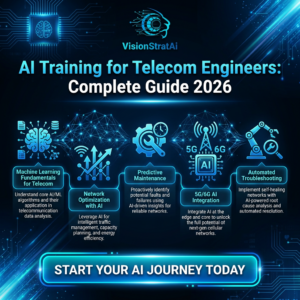
AI Training for Telecom Engineers: Complete Guide (2026)
The telecom industry is evolving faster than ever. With 5G expansion, early 6G research, network virtualization, and massive data generation, Artificial Intelligence (AI) is no longer optional — it’s a strategic necessity.
In 2026, telecom engineers who understand AI are leading innovation in network optimization, predictive maintenance, cybersecurity, and customer experience.
This complete guide explains why AI training is essential for telecom engineers, what to learn, and how to build practical expertise.
Why AI Matters in Telecom in 2026
Telecom operators generate enormous volumes of data from:
- Network traffic
- Customer interactions
- IoT devices
- Infrastructure sensors
- Billing and CRM systems
AI transforms this data into actionable intelligence.
Key AI Applications in Telecom
-
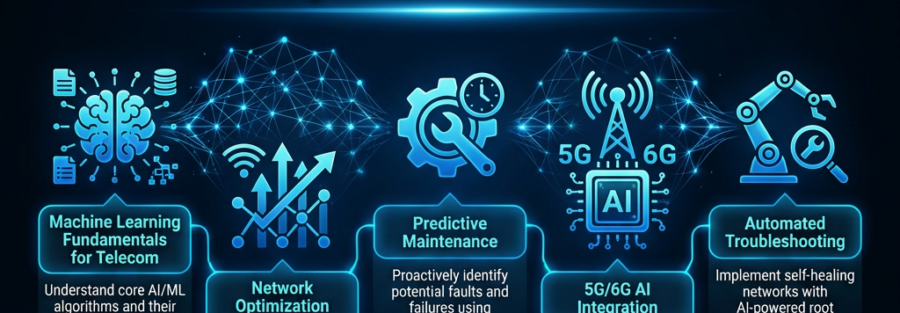
Network Optimization
- Traffic prediction
- Dynamic bandwidth allocation
- Self-optimizing networks (SON)
-
Predictive Maintenance
- Failure detection before outages occur
- Reduced downtime
- Lower operational costs
-
Fraud Detection & Security
- Anomaly detection
- Real-time threat monitoring
-
Customer Experience Enhancement
- Churn prediction
- Personalized offers
- AI-powered chatbots
-
Energy Efficiency
- Smart power optimization
- Sustainable infrastructure management
Core Skills Telecom Engineers Need in 2026
AI training for telecom engineers must be practical and industry-focused.
1. AI & Machine Learning Fundamentals
- Supervised and unsupervised learning
- Neural networks
- Model evaluation
- Feature engineering
2. Python for Data & AI
- NumPy & Pandas
- Scikit-learn
- TensorFlow or PyTorch
3. Telecom Data Understanding
- CDR analysis
- KPI monitoring
- Network performance metrics
- OSS/BSS data structures
4. AI for Network Automation
- Self-healing systems
- AI-driven orchestration
- Reinforcement learning for resource allocation
5. MLOps & Deployment
- Model monitoring
- API integration
- Cloud deployment
- Edge AI for telecom infrastructure
Learning Path: Step-by-Step Roadmap
Step 1: Build Strong Foundations
Start with:
- Python programming
- Statistics and probability
- Machine learning basics
Step 2: Work on Telecom Use Cases
Practice on:
- Churn prediction datasets
- Network anomaly detection
- Traffic forecasting models
Step 3: Learn Cloud & Deployment
Telecom AI systems must scale. Learn:
- Cloud platforms
- Docker basics
- Model serving techniques
Step 4: Apply AI to Real Network Scenarios
Focus on:
- RAN optimization
- Core network automation
- Edge intelligenc
Certifications & Training Formats
Telecom engineers can choose between:
- Corporate AI training programs
- Industry-focused bootcamps
- Online AI certifications
- Custom in-company workshops
The best programs combine:
- Theory
- Hands-on projects
- Real telecom datasets
- Business strategy alignment
Challenges in AI Adoption in Telecom
Despite its benefits, AI integration faces challenges:
- Legacy systems
- Data silos
- Talent gaps
- Integration complexity
- Regulatory compliance
That’s why structured AI training tailored specifically for telecom engineers is critical.
The Future of AI in Telecom
By 2026 and beyond, we will see:
- Fully autonomous networks
- AI-native telecom architectures
- Real-time edge intelligence
- AI-powered 6G research
- Hyper-personalized telecom services
Engineers who master AI will become strategic assets for telecom operators and vendors.
Conclusion
Discover our AI Training for Telecom programs designed specifically for telecom engineers and technical teams.
Our programs combine real-world telecom use cases, hands-on AI implementation, and strategic insights to help your team build intelligent, automated, and future-ready networks.
Equip your engineers with the AI skills needed to lead telecom innovation in 2026 and beyond.