
Importance of AI in Telecom Training & Use Cases
Introduction
The telecom industry is rapidly transforming as companies face increasing data volumes, complex networks such as 5G, and evolving customer expectations. Artificial Intelligence (AI) is no longer just a buzzword — it is now a strategic driver of performance, personalization, and operational excellence. However, adopting AI effectively requires well-trained teams who can translate technology into real business impact.
Why AI Is Essential in Telecom
AI helps telecom companies do more than automate tasks — it enables them to analyze massive datasets, predict issues, and optimize operations in real time. According to industry insights, nearly 90% of telecom operators are using AI to improve efficiency and gain a competitive edge.
AI enhances:
- Network performance by dynamically managing data flow.
- Predictive analytics to anticipate failures before they impact customers.
- Customer experience with personalized services and rapid suppor.
Key AI Use Cases in Telecom
1. Predictive Maintenance
AI models can analyze network data to identify equipment trends and predict potential failures before they happen. This reduces downtime, lowers maintenance costs, and improves overall reliability.
2. Network Optimization
Machine learning algorithms adjust network resources in real time, balancing traffic loads and enhancing performance. These systems help operators manage bandwidth more efficiently and deliver consistent service.
3. Customer Service Automation
AI-powered tools like chatbots and virtual assistants offer immediate support, resolve common queries, and assist human agents with context-aware responses. This reduces wait times and improves customer satisfaction.
4. Fraud Detection & Security
AI analyzes patterns in network traffic to detect unusual behavior and threats. Telecom companies use this to identify and prevent fraud, safeguarding user data and revenue streams.
5. Resource Allocation
AI can allocate bandwidth and other resources dynamically according to demand, preventing congestion and maintaining optimal performance even during peak loads.
Why Telecom Teams Need AI Training
While AI technologies deliver powerful capabilities, technology alone isn’t enough. Without targeted training, teams may struggle to interpret AI outputs, integrate solutions into workflows, or scale AI use cases across the organization.
AI training enables telecom professionals to:
- Understand how machine learning and AI models work.
- Interpret insights and make data-driven decisions.
- Apply AI tools to real operational challenges.
- Collaborate effectively with data science and technical teams.
Training turns AI from a tool into a business advantage by empowering teams to use it confidently and strategically.
Business Impact of AI Training
Investing in AI training helps telecom teams achieve measurable outcomes, including:
- Reduced operational costs through automation and predictive analytics.
- Improved service quality with proactive network management.
- Better customer experience driven by personalized interactions.
- Faster decision-making based on real-time data insights.
Telecom companies that build internal AI capabilities are better positioned to innovate and lead in an increasingly competitive industry.
Conclusion
AI is reshaping the telecom landscape, enabling smarter networks, faster issue resolution, and more personalized customer experiences. But the full potential of AI is unlocked only when telecom professionals are properly trained to understand and use these technologies. Practical AI training prepares teams to turn insights into action and to harness AI for strategic growth.
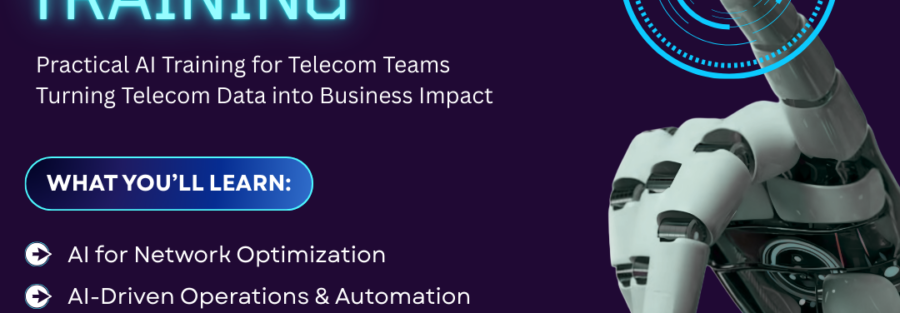
Discover VisionStratAI’s AI Training for Telecom Professionals to accelerate your team’s AI capabilities and create real business impact