



Emergency medicine operates in an environment where uncertainty is constant and margins for error are minimal.
Trauma, acute surgical emergencies, and life-threatening complications demand rapid decisions under extreme pressure.
In this context, artificial intelligence is no longer a futuristic concept—it is becoming a foundational capability in modern emergency surgery.
Rather than replacing clinicians, AI augments human expertise by improving precision, anticipation, and coordination during the most time-sensitive interventions.
From real-time intraoperative guidance to predictive risk modeling, intelligent systems are reshaping how emergency surgical care is delivered.
AI-Driven Surgical Intelligence in Real Time
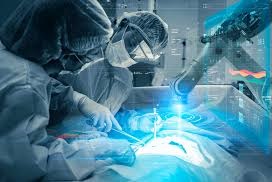
One of the most transformative applications of AI in emergency surgery is real-time procedural support.
Advanced computer vision systems continuously analyze live surgical feeds, sensor data, and instrument positioning during operations.
By correlating visual data with anatomical models, these platforms can:
- Identify critical structures such as vessels, nerves, and organs
- Track surgical instruments with extreme spatial accuracy
- Detect unsafe trajectories or tissue stress before injury occurs
Surgeons receive immediate alerts or visual cues, often through augmented displays, enabling corrective action in fractions of a second.
This capability is particularly valuable in trauma cases where anatomy may be distorted, bleeding obscures visibility, or rapid decisions are unavoidable.
Over time, these systems learn from each procedure, adapting recommendations to individual surgical techniques and improving performance continuously.
Predictive Risk Modeling During Emergency Procedures
Emergency surgeries often begin with incomplete patient histories, limited diagnostics, and evolving clinical conditions.
AI addresses this uncertainty through predictive analytics that assess risk dynamically throughout the procedure.
Machine learning models evaluate hundreds of variables in parallel, including:
- Vital signs and physiological trends
- Laboratory results and medication profiles
- Procedural context and environmental factors
Instead of static pre-operative risk scores, AI systems update predictions in real time.
This allows teams to anticipate complications such as bleeding, infection, hemodynamic instability, or adverse drug interactions before they occur.
By shifting emergency care from reactive to proactive, predictive intelligence improves surgical preparedness and stabilizes outcomes in unpredictable situations.
Precision Robotics in Trauma and Emergency Surgery
Robotic platforms enhanced with AI introduce a new level of mechanical accuracy into emergency surgical environments.
These systems are designed to support surgeons during complex or physically demanding procedures, particularly when fatigue, tremor, or time pressure may affect performance.
Key capabilities include:
- Sub-millimeter movement control for delicate repairs
- Force-sensing feedback to prevent tissue damage
- Motion compensation for respiration and cardiac activity
AI algorithms continuously adjust robotic behavior based on real-time tissue response, ensuring optimal interaction even as conditions change.
Integration with imaging data enables precise navigation through complex anatomy using minimally invasive approaches.
As a result, emergency departments equipped with intelligent robotic systems can manage higher-complexity cases locally,
reducing the need for transfers and accelerating definitive care.
Intelligent Automation Across Emergency Surgical Workflows
Beyond the operating field, AI plays a critical role in optimizing emergency department operations.
Intelligent automation reduces administrative burden and improves coordination across multidisciplinary teams.
Applications include:
- Real-time transcription of surgical notes using natural language processing
- Automated generation of procedural documentation and reports
- Dynamic operating room scheduling based on live case progression
AI-powered logistics systems monitor equipment availability, anticipate supply shortages,
and coordinate interdepartmental workflows involving radiology, intensive care, and anesthesia teams.
This operational intelligence minimizes delays, reduces errors, and ensures that resources are available precisely when emergencies converge.
AI-Powered Simulation and Surgical Training
Emergency surgery demands rare skills that cannot be developed through routine exposure alone.
AI-driven simulation platforms address this challenge by creating adaptive, high-fidelity training environments.
These systems generate realistic emergency scenarios with varying complexity, allowing surgeons to practice:
- Rapid decision-making under stress
- Technical execution in unpredictable conditions
- Management of rare but critical complications
Performance analytics track accuracy, timing, and response patterns, delivering personalized feedback that accelerates skill development.
Virtual and mixed-reality integrations enable repeated practice without patient risk, improving readiness before real emergencies occur.
For institutions, this results in faster onboarding, safer credentialing, and consistently higher performance standards.
The Emergence of the Intelligent Operating Room
The convergence of AI, robotics, predictive analytics, and automation is giving rise to the intelligent operating room—a connected environment
where data flows seamlessly to support surgical decisions.
In this model:
- Surgeons remain fully in control
- AI acts as a cognitive and technical assistant
- Decision quality improves without increasing mental load
Future developments may include automated suturing, adaptive anesthesia optimization, and intraoperative molecular analysis.
Each advancement reinforces a central principle: the strongest outcomes emerge from collaboration between human judgment and machine intelligence.
Conclusion: A New Standard for Emergency Surgical Care
Artificial intelligence is not a distant vision for emergency medicine—it is rapidly becoming a defining element of high-performance surgical care.
By enhancing precision, foresight, and coordination, AI enables medical teams to operate more effectively when time and accuracy matter most.
Hospitals that invest in intelligent surgical systems position themselves at the forefront of clinical excellence,
improving patient outcomes while strengthening resilience under pressure.
The future of emergency surgery is not autonomous machines—it is intelligent human-machine collaboration,
setting a new global standard for critical care.


3 Comments
Riva Collins
It’s no secret that the digital industry is booming. From exciting startups to need ghor
global and brands, companies are reaching out.
Obila Doe
It’s no secret that the digital industry is booming. From exciting startups to need ghor hmiu
global and brands, companies are reaching out.
Riva Collins
It’s no secret that the digital industry is booming. From exciting startups to need ghor hmiu global and brands, companies are reaching out.